If you are searching for a lawn aeration service near you, the real goal is likely a healthier lawn that continues to improve over time. Core aeration can help with certain types of compaction, but many Austin-area lawns are held back by dense clay soil and low organic matter.
At Plantscape Solutions, we evaluate the conditions beneath the grass before recommending a service. For most lawns, top dressing provides a more effective long-term approach by improving soil health, supporting natural aeration, and encouraging stronger root growth.
Can Lawn Aeration Fix Clay Soil?
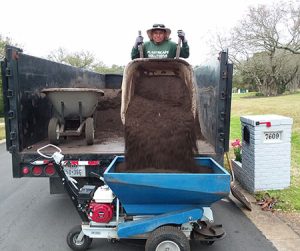
Core aeration removes small plugs of soil, creating temporary openings that improve the movement of air, water, and nutrients into the root zone. This can be useful when surface compaction caused by foot traffic, equipment, or construction is the main problem.
Most residential lawns in the Austin area, however, grow in dense clay soil made up of extremely fine particles that pack tightly together and leave limited pore space. Clay also expands when wet and contracts as it dries, causing the soil to settle and aeration holes to gradually close. Although aeration may briefly improve drainage and oxygen exchange, it does not change the soil’s composition, add organic matter, or improve conditions throughout the entire root zone.
When low organic matter and poor soil structure are limiting growth, roots remain shallow, microbial activity may decline, and water and nutrients move less efficiently through the soil. In these cases, the lawn needs more than temporary openings to achieve lasting improvement.
Top Dressing Builds Healthier Soil
Healthy soil depends on organic matter and beneficial microorganisms that support strong root growth. Organic matter improves soil structure, creating more space for water, oxygen, and roots, while microbes break down organic material into nutrients the grass can use.
Plantscape Solutions supports these natural processes through lawn top dressing. Our custom blend, developed with Organics By Gosh, contains approximately 80 percent compost and 20 percent fine-washed sand. The compost adds organic matter and supports microbial activity, while the blend helps improve growing conditions in Austin’s clay-heavy soils.
As the material works into the root zone, the compost adds organic matter and supports microbial activity, while the blend improves moisture movement and growing conditions in Austin’s clay-heavy soils.
Results That Continue to Grow
Each top dressing application adds organic matter, supports beneficial microbial activity, and encourages deeper root growth. As roots expand, they create natural channels through the soil that improve aeration and help air, water, and nutrients move more efficiently through the root zone.
These benefits build over time, resulting in:
- Fuller, thicker turf
- Richer, more consistent color
- Deeper, stronger roots
- Better drought tolerance
- Improved water infiltration
- Reduced runoff and pooling
- More efficient nutrient use
- More consistent growth throughout the season
Rather than providing temporary relief from compaction, top dressing gradually improves soil structure and creates a stronger foundation for long-term lawn health.
A Lasting Solution for Your Lawn
The best lawn treatment depends on what is actually limiting growth. While aeration may help with localized compaction, improving soil quality often delivers broader, longer-lasting benefits for Austin’s clay-heavy lawns.
Since 1999, Plantscape Solutions has helped Greater Austin homeowners improve their lawns with treatments tailored to each property’s soil, drainage, and turf conditions. Contact us today to schedule an evaluation and learn how top dressing can create a healthier foundation for your lawn.
